Studio Notes: Building a Compact Year‑Round Indoor Herb Station
Problem — What makes a small indoor herb station actually work?
Question I asked in the studio: how can I make a compact herb station that grows reliably all year, fits a small kitchen or balcony, and doesn’t demand constant attention? The typical pitfalls are inconsistent light, overwatering, and containers that restrict roots. The aim here is to design a simple system that balances plant needs with everyday habits.
Principles — Rules to follow when you plan and plant
1. Match light to plant needs
Most culinary herbs thrive on bright light. South- or west-facing windows are ideal; east windows work well too. If you have low light, pick shade-tolerant herbs or add a small full-spectrum grow light. Light isn’t an aesthetic suggestion — it’s the foundation.
2. Choose shallow, breathable containers
Herbs don’t need deep pots; 10–15 cm (4–6 in) depth is often enough. Use terracotta or ceramic for breathability unless you’ll forget to water—then lightweight plastic reduces drying. Ensure good drainage so roots don’t sit in water.
3. Use a light, well-draining soil mix
A mix of potting soil with added perlite or coarse sand prevents compaction. This helps roots stay healthy and reduces fungal problems. Avoid garden soil straight from outside; it’s often too heavy for container herbs.
4. Water by touch and rhythm, not rigid schedules
Lift the pot to gauge weight and probe the top 2–3 cm of soil: if it’s dry, water. Herbs like basil prefer consistently moist soil, while rosemary and thyme tolerate (and prefer) drier conditions. Establish a weekly check routine rather than a fixed watering calendar.
5. Grow with an easy pruning and rotation habit
Regular trimming encourages bushier growth and keeps herbs productive. Rotate pots a quarter-turn every few days to ensure even light exposure. Harvest selectively to avoid shocking the plant.
Examples — Three compact setups based on light and space
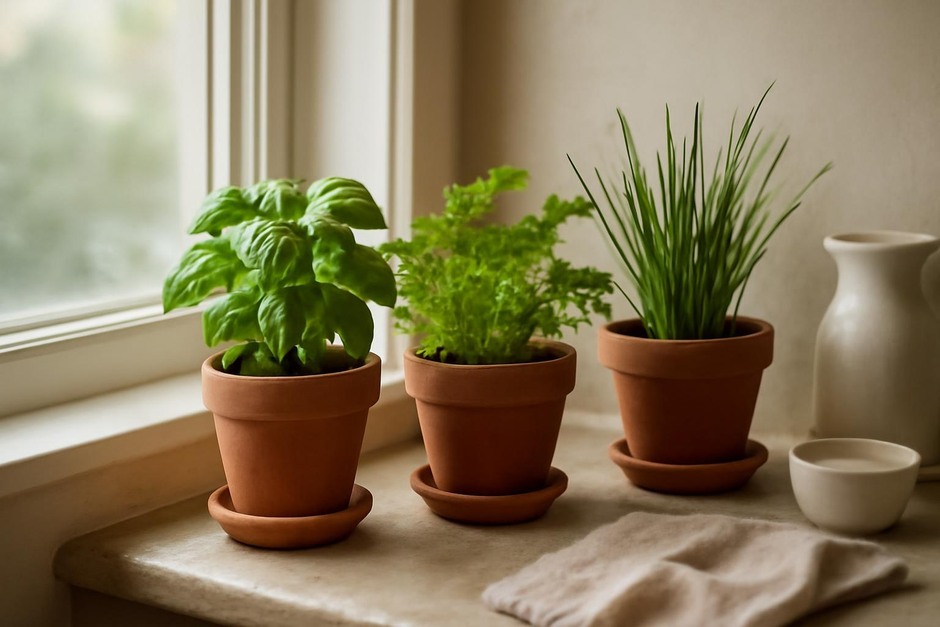
Example A: Sunny windowsill trio
Best for a south or west window. Choose basil, parsley and chives in three 12 cm terracotta pots. Use a light potting mix with perlite. Water when the top 2 cm is dry and pinch back basil flower buds to keep leaves tender. Rotate pots every few days.
Example B: Narrow shelf with a small grow light
For apartments with limited natural light. Mount a shallow shelf at chest height and install a clip-on full-spectrum LED. Grow cilantro, oregano and mint in ceramic or plastic pots. Keep the light on for 10–12 hours daily; use a simple timer. Mint likes moisture—use a saucer to catch overflow.
Example C: Hanging pocket herb wall for a balcony or small vertical space
Use a fabric pocket planter or system of small pots hung on a rail. Plant thyme, lemon balm and sage in individual pockets. Choose fast-draining mix and water from above until water runs through. This option saves bench space and creates a green backdrop for outdoor meals.
Review — What worked in the studio and what I adjusted
Process notes: I started with a south-facing windowsill and basil/parsley/chives. Basil needed most attention—frequent pinching and slightly more water. Parsley proved forgiving and rebounded quickly after larger harvests. Chives were the least demanding, tolerating brief dry spells.
In lower-light trials, adding a modest LED improved leaf color and growth rate noticeably; the difference was quick enough to be satisfying. I found terracotta pots dried faster than I liked in winter; switching to glazed ceramic reduced watering frequency while retaining good drainage. The habit that made the biggest difference was the weekly one-minute check: lift, touch, trim.
Practice checklist — Quick actions for a resilient herb station
- Place herbs where they receive bright light; add a small grow light if needed.
- Use shallow pots (10–15 cm) with drainage holes and a free-draining soil mix.
- Check soil weekly: lift the pot and feel top 2–3 cm; water only when needed.
- Rotate pots a quarter-turn every few days for even growth.
- Prune and harvest regularly to encourage bushiness; remove flowers on basil.
- Watch for pests: inspect undersides of leaves during the weekly check.
- Adjust container material seasonally—terracotta dries faster in winter; consider glazed ceramic or lightweight plastic.
Final note: think in routines rather than rigid rules. A few minutes each week to check light, moisture and pruning will keep a compact herb station productive and pleasurable year-round.